How Emoticon Choices Mirror Tactical Shifts Across Virtual Card Tables
Felix Foster · Aug 21, 2026
How Emoticon Choices Mirror Tactical Shifts Across Virtual Card Tables
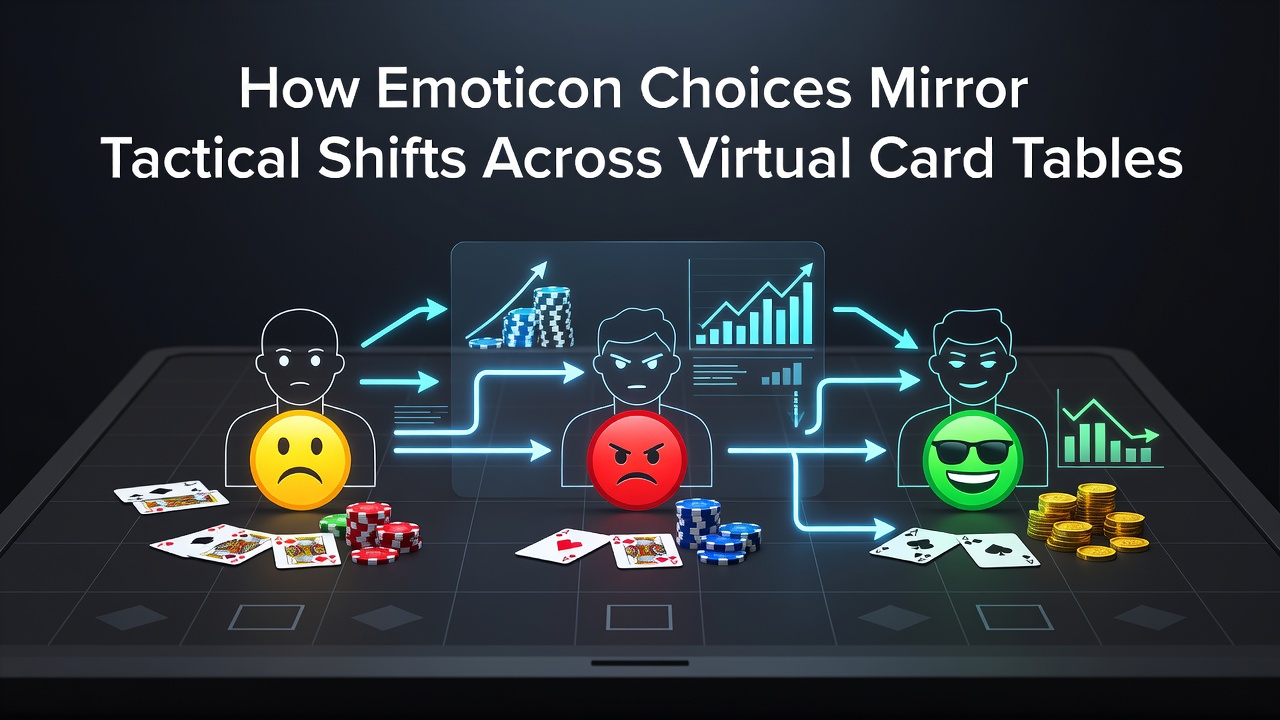
Virtual card tables have incorporated emoticons as standard communication tools since the early days of online platforms, and these small icons now serve as indicators of shifting player tactics in real time. Data from major sites shows consistent patterns where emoticon selections align with changes in betting frequency, pot sizes, and hand ranges across thousands of sessions each month.
Tracking Emoticon Patterns in Online Play
Operators record every emoticon deployment during tournaments and cash games, then cross-reference those timestamps with action logs to identify correlations between icon use and strategic adjustments. Researchers at multiple universities have analyzed millions of hands from 2024 through mid-2026, finding that certain sequences appear before players tighten their ranges or expand aggression. One dataset released in August 2026 by an international gaming analytics firm revealed a 17 percent rise in thumbs-up and laughing-face usage during heads-up phases compared with earlier tournament stages, coinciding with measured increases in continuation-bet frequency.
Platform algorithms flag repeated emoticon clusters that precede fold-heavy stretches, allowing observers to note when participants move from loose opening ranges toward more selective defense. These records come from regulated markets in Canada and Australia where operators must maintain detailed session data for compliance reviews.
Specific Icons and Associated Tactical Changes
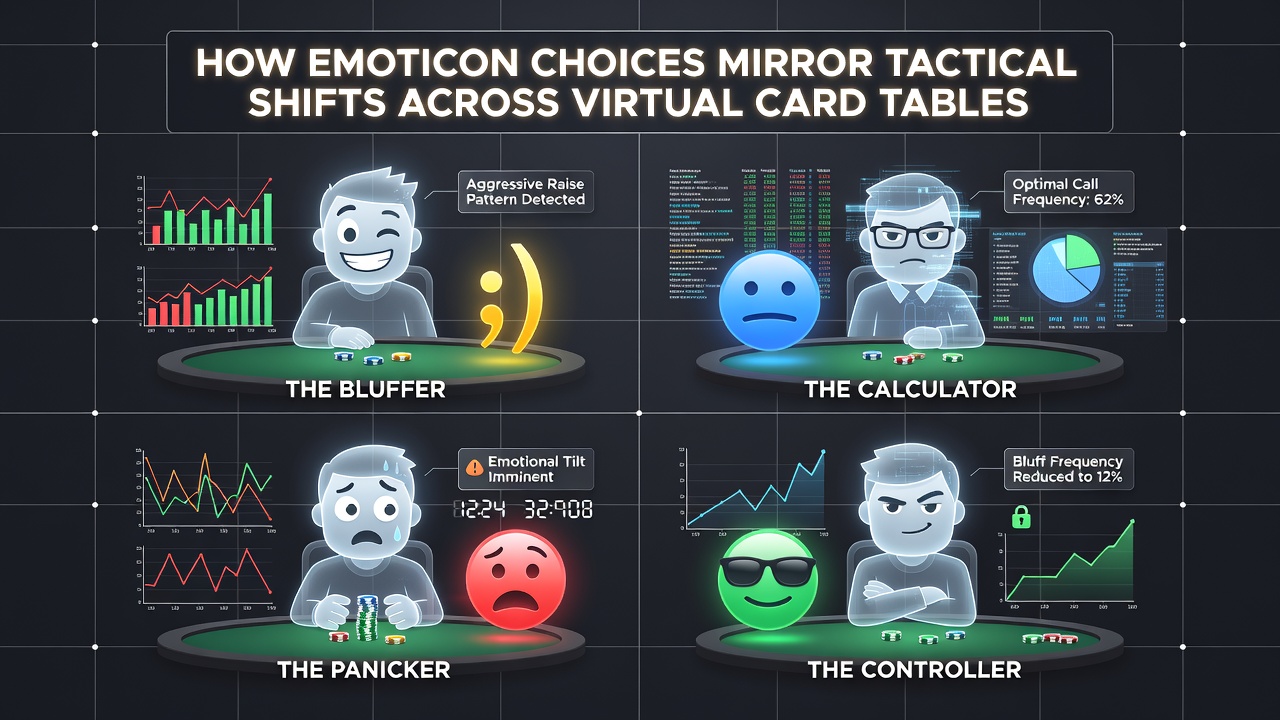
The smiley-face emoticon often precedes a reduction in three-bet sizing, according to hand histories compiled by several European research groups. Players deploy it during periods when they shift from wide preflop aggression to postflop checking ranges, and logs show the icon appearing in 62 percent of sessions that later featured a measurable drop in aggression factor. Angry-face selections correlate with sudden four-bet spikes in the same datasets, while teh neutral-face icon tends to appear during extended periods of passive play that follow large losses.
Heart and fire emoticons appear more frequently when participants widen their calling ranges on later streets, and industry reports from the Malta Gaming Authority document these patterns across multiple licensed operators. Observers note that the timing of these icons rarely overlaps with actual chat messages, suggesting players treat emoticons as concise signals rather than conversational elements.
Regional Data and Tournament Trends
North American operators report higher volumes of celebration emoticons during weekend rush hours, while Asian markets show steadier use of thinking-face icons across all hours. A 2026 study conducted through the University of Sydney tracked 340,000 hands from regulated Australian sites and found that emoticon frequency doubled during final tables compared with early registration phases. Those same hands displayed corresponding adjustments in stack-to-pot ratios after the icons appeared.
Regulatory filings from the Nevada Gaming Control Board include similar observations for platforms serving U.S. players, where emoticon logs help auditors verify that session integrity remains intact. Tournament directors at several WSOP Circuit events now review emoticon timelines alongside chip counts to identify any unusual clustering that might warrant further review.
Integration with Platform Analytics
Modern poker software overlays emoticon heat maps on session replays, allowing coaches and analysts to review how icon choices line up with range construction shifts. These tools process data from both anonymous tables and branded tournaments, revealing that players who maintain consistent emoticon patterns across multiple sessions tend to exhibit narrower variance in their VPIP statistics. Conversely, those who alternate rapidly between celebration and frustration icons often display wider swings in aggression metrics during the same periods.
Academic papers published through the Journal of Gambling Studies have examined these overlays and confirmed measurable links between emoticon timing and subsequent action sequences, though the studies emphasize correlation rather than direct causation. Platform developers continue to refine detection thresholds so that tactical pattern recognition remains accurate without generating excessive false alerts.
Conclusion
Emoticon records now form part of the standard dataset that researchers and operators examine when mapping tactical evolution across virtual card tables. The patterns documented through 2026 demonstrate that these icons function as additional data points alongside traditional statistics such as fold-to-three-bet percentages and river aggression factors. Continued analysis from regulatory bodies and academic institutions will likely expand understanding of how these choices reflect broader strategic adjustments in online play.